music studies
Théodore de Bèze about Psalm 91
short version (Extract)
Genève late october 1548 (Théodore de Bèze)Agitur annus tricesimus primus ex quo per Dei gratiam ultro patriam meaque omnia reliqui ut Christe libere servirem. Accidit autem mihi tunc primum in publicum Christianorum vestigium ponenti, ut hunc Psalmum coetus (+ ipse] concineret, cujus cantu, perinde ac si Deum ipsum audirem me proprie compellantem, ita me sensi recreari, ut illum ab eo tempore habuerim intime pectori meo insculptum: et hoc vero coram Deo testari possim, ex eius meditatione me non tantum, quum essem etiam [+ triennio post] peste correptus, et idem malum familiam meam [quod quater factum est] invasisset, verum etiam in gravissimis aliis tentationibus, mirificam laevationem aegritudinis ac doloris ex eo percepisse.
Thirty-one years have now passed since, by the grace of God, I voluntarily left my homeland and everything I owned so that I might serve Christ freely. It happened to me then, when I was first stepping into a public gathering of Christians, that the congregation itself was singing this Psalm; by its singing—just as if I were hearing God Himself speaking to me personally—I felt so revived that from that time on, I have kept it deeply engraved upon my heart. And indeed, I can testify before God that from meditating upon it, I received a wonderful lifting of my sickness and grief—not only when I was afflicted by the plague [three years later], and when the same evil attacked my family (which happened four times), but also in other most grievous trials.
Source: Psalmorum Davidis et aliorum prophetarum, libri
quinque: Argumentis & Latina paraphrasi illustrati, ac vario
carminum genere latinè expressi (Antwerp: Nicolaus
Barius, 1580), p. 393: “In Psalmum 91 Argumentum et usus”. Between
square brackets the additions from the Geneva edition of 1581. Bèze and
his girl-friend Claudine Denosse arrived in Geneva around 23 October
1548.
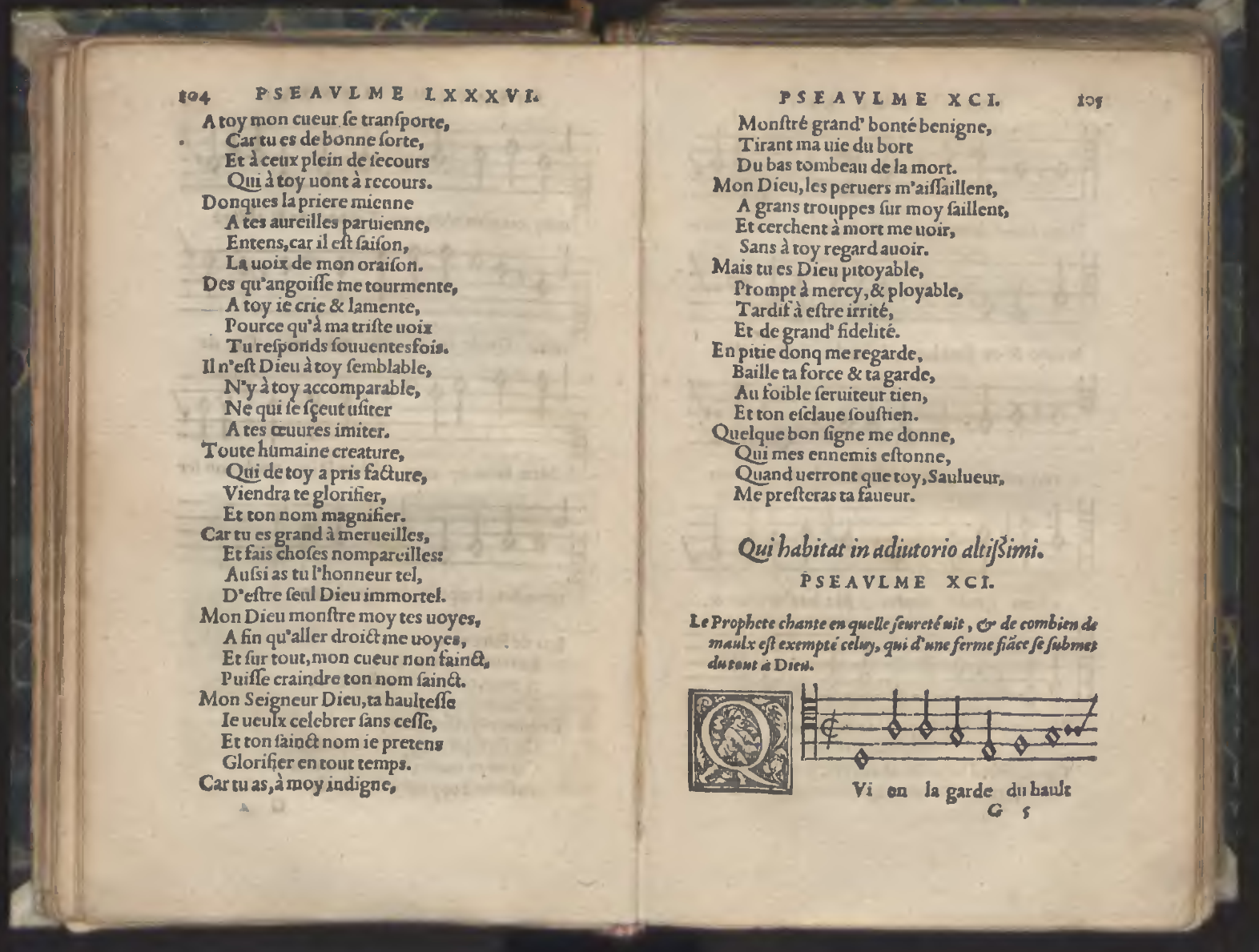
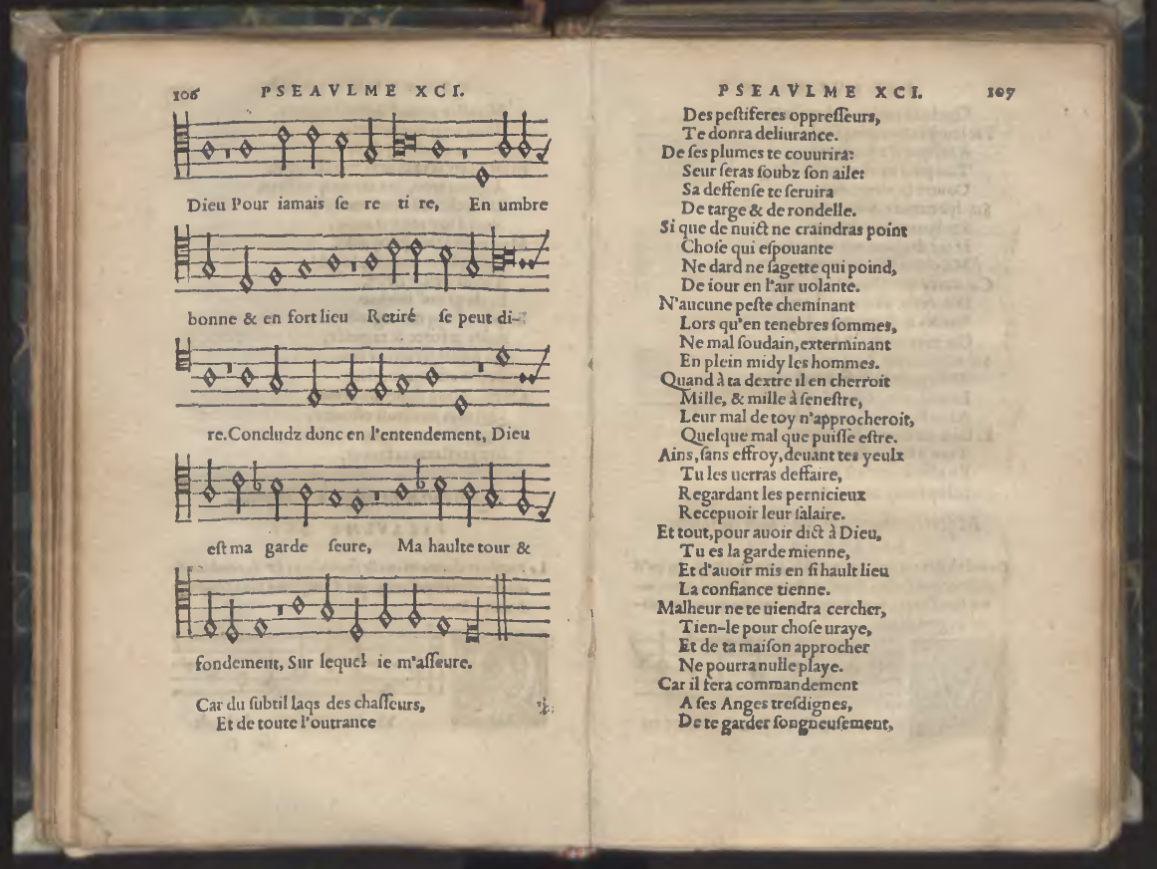
Below the Psalm that was sung: Qui en la garde du haut Dieu / pour
jamais se retire, / en umbre bonne & en fort lieu / retiré se peut
dire. (with a really beautiful tune – photo from a Lyon edition
of the Psalms, published in 1548).
Long version
Psalmus nonagesimusprimus, διδακτικός.Argumentum & usus.
Assentior optimo & doctissimo viro D. Henrico Mollero, qui pestilentiam illam horribilem cuius fit mentio 2. Sam. 24. huic Psalmo occasionem præbuisse existimat. Congruunt enim & verba & sententiæ ad hanc historiam, & tunc egebat, si unquam aliâs, insigni consolatione populus, ac Rex inprimis ipse, qui hanc perniciem sibi & suis ultrò accersiverat. Hoc autem Psalmo nihil neque solidius, neque splendidius etiam dici posse, & in eo elucere singulare divinæ facundiæ exemplum spero mihi concessuros quicunque & sententiarum & vocum ipsarum pondus expenderint. Et quum aliquot abhinc annis plurimas undique regiones Dominus peste flagellarit, ac nunc videatur eandem plagam minari, cuperem ego non suscipi à Theologis illam ad medicorum certè scholas relegandam disputationem, sit ne contagiosa pestis an non, sed doctrinam potius, hoc Psalmo tam divinè explicatam, & tam necessariam, animis hominum inculcari: in quo videlicet providentia Dei non universalis duntaxat sed maximè quoque particularis, secundas omnes causas iustissimè simul & moderatissimè dirigentis, & pro salute suoru[m] excubantis, ita graphicè spectanda proponitur, totque ac ta[m] expressis se[n]tentiis, inducta ipsius Dei loquentis persona, sancitur, ut nihil hac in re amplius desiderari posse videatur. Me quide[m] certè exponere ad Dei gloriam non pigebit quod ego sum reipsa expertus. Agitur annus tricesimus primus ex quo per Dei gratiam ultrò patriam meaque omnia reliqui ut Christo liberè servire[m]. Accidit aute[m] mihi tunc primu[m] in publicu[m] Christianorum vestigium ponenti, ut hunc Psalmum cœtus concineret, cuius cantu, perinde ac si Deum ipsum audirem me propriè compellantem, ita me sensi recreari, ut illum ab eo te[m]pore habuerim intimè pectori meo insculptum: & hoc verè coram Deo testari possim, ex eius meditatione me non tantùm quum essem etiam peste correptus, & idem malum fa-|394|miliam meam (quod quater factum est) invasisset, verùm etiam in gravissimis aliis te[n]tationibus, mirificam levationem ægritudinis ac doloris ex eo percepisse.
English translation
Psalm Ninety-One, didactic.
Argument and use.I agree with that excellent and most learned man, Dr Heinrich Moller, who holds that the terrible pestilence mentioned in 2 Samuel 24 gave occasion to this psalm. For both its words and its thoughts fit that episode. And then, if ever, the people stood in need of exceptional consolation, and above all the king himself, who had of his own accord brought this destruction upon himself and his people. Whoever has weighed the force both of its thoughts and of the very words will, I trust, grant me that nothing more solid, nor indeed more splendid, can be said than this psalm, and that a singular example of divine eloquence shines forth in it.
Some years ago the Lord scourged very many regions on every side with the plague, and he now seems to threaten the same affliction. I would therefore wish that theologians would not take up the dispute whether the plague is contagious or not, a question that surely belongs to the schools of the physicians. Rather, they should impress on people's minds the doctrine set forth so divinely, and so necessary, in this psalm. In it the providence of God is set before our eyes so vividly, and confirmed by so many and such explicit statements, with God himself introduced as the speaker, that nothing further on this matter could seem to be wanted. That providence is not merely universal but also, and especially, particular: it directs all secondary causes with the utmost justice and moderation, and it keeps watch over the welfare of his own.
For my part, I shall certainly not be loath to set out, to the glory of God, what I have experienced in fact. It is now the thirty-first year since, by the grace of God, I of my own accord left my country and all that was mine in order to serve Christ freely. It happened then that when I first set foot in a public assembly of Christians, the congregation was singing this psalm. Through its singing I felt so revived, just as if I heard God himself addressing me personally, that from that time I have kept it engraved deep in my heart. And this I can truly testify before God: from meditating on it I have received wonderful relief from sorrow and pain. That was so not only when I myself was stricken with the plague, and when the same illness had attacked my household (which happened four times), but also in other most grievous trials.
Notes
- D. Henricus Mollerus: Heinrich Moller (1530–1589), the Wittenberg Hebraist, whose Enarrationes Psalmorum Beza is evidently using.
- accersiverat is a variant spelling of arcessiverat. Sit ne is printed as two words for sitne. secundas causas are the scholastic "secondary causes."
- tricesimus primus: Beza left France in the autumn of 1548. The thirty-first year then points to 1578–79, which matches the first edition (Geneva 1579). The passage was presumably carried over unchanged into the Antwerp reprint.
- The psalm Beza heard sung on his arrival in Geneva would have been Marot's version of Psalm 91, "Qui en la garde du haut Dieu." This is worth checking against the Genevan psalter editions of 1548 or thereabouts.